
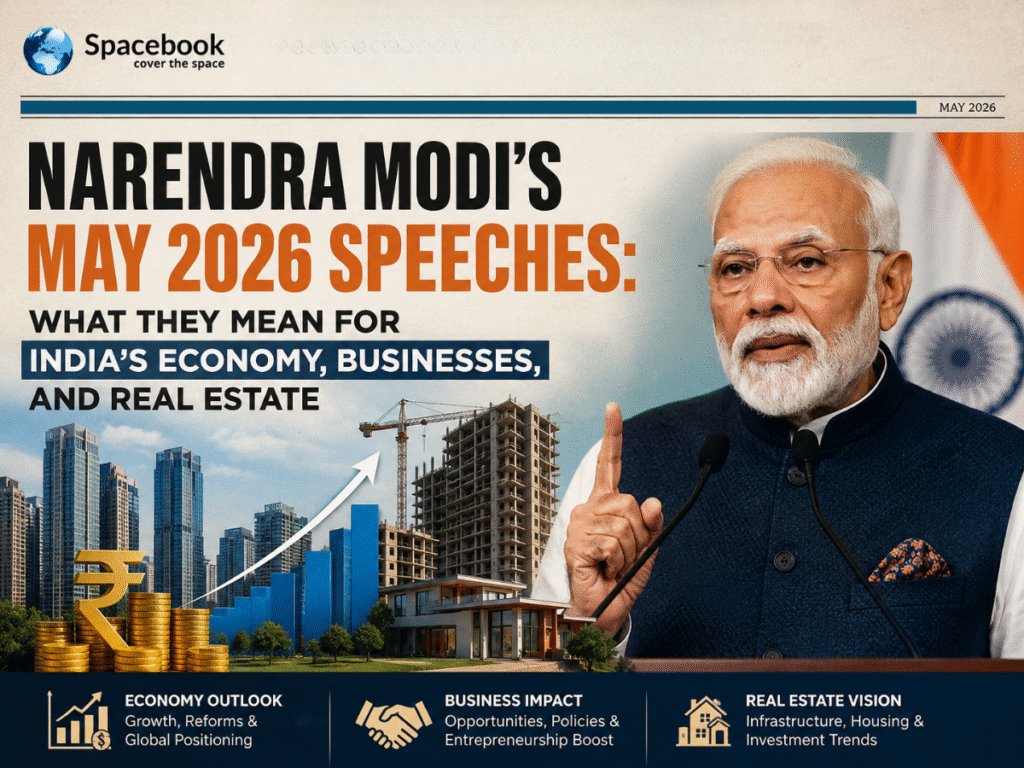
India is currently navigating a rapidly changing global environment, and the recent speeches by Narendra Modi in May 2026 reflected exactly that. From economic resilience to cultural pride and youth empowerment, the Prime Minister’s addresses carried strong messages for citizens, businesses, and investors across the country.
His most impactful speech came during a national address in Hyderabad, where he discussed the economic challenges emerging from the ongoing West Asia crisis and rising crude oil prices. At a time when global uncertainty is affecting markets worldwide, Modi’s message focused on self-reliance, responsible consumption, and long-term national stability.
India’s Economic Challenge and the Call for Self-Reliance
With crude oil prices crossing $100 per barrel globally, the Prime Minister urged citizens to adopt practical measures to reduce pressure on India’s foreign exchange reserves. His appeal was not only economic but also strategic.
Some of the key recommendations included:
- Reviving Work-From-Home practices
- Using public transport and carpooling
- Reducing dependency on imported products
- Avoiding unnecessary foreign travel
- Limiting gold purchases for one year
- Reducing imported cooking oil consumption
These suggestions highlighted a broader vision — strengthening India internally during uncertain global conditions.
For businesses, the message was clear: efficiency, sustainability, and local growth will become increasingly important in the coming years.
Impact on Business and Corporate Sectors
The Prime Minister’s emphasis on conserving resources could significantly influence corporate behavior, especially in metro cities and major commercial hubs.
Many companies may reconsider hybrid work models to reduce fuel costs and operational expenses. Industries focusing on domestic manufacturing and “Made in India” products could also benefit from increased consumer support.
This shift may especially impact regions like:
- Delhi
- Gurugram
- Noida
- Greater Noida
These cities are home to major IT companies, startups, multinational offices, and rapidly growing residential communities.
If work-from-home and hybrid work culture expand again, residential real estate markets in suburban locations could see renewed growth. Larger apartments, integrated townships, and lifestyle-driven communities may become more attractive for buyers seeking comfortable work-from-home environments.
Greater Noida and Delhi NCR: A Region Positioned for Growth
Despite global economic uncertainty, infrastructure development in Delhi NCR continues at a strong pace. Projects such as the Noida International Airport (Jewar Airport), metro expansions, expressways, and commercial corridors are keeping investor confidence high.
Greater Noida, in particular, has emerged as one of NCR’s fastest-growing real estate markets because of:
- Better affordability compared to Gurugram and Delhi
- Modern township planning
- Strong road connectivity
- Growing IT and business ecosystem
- Upcoming airport-driven development
As fuel prices and urban congestion increase, many families and professionals are shifting toward well-planned suburban areas that offer both affordability and quality living.
Meanwhile, Gurugram continues to dominate the luxury and commercial real estate segment with premium office spaces and high-end residential developments.
Cultural Identity and National Confidence
Apart from economic discussions, Modi’s speeches in Somnath and Vadodara also focused heavily on India’s cultural and educational development.
At the Somnath Amrut Mahotsav in Gujarat, he highlighted the importance of preserving India’s heritage and spiritual identity. During the Sardardham Hostel inauguration, he emphasized youth empowerment and educational expansion.
These speeches reflected a larger national narrative — balancing modern economic growth with cultural roots and educational progress.
Final Thoughts
Narendra Modi’s May 2026 speeches were more than political addresses. They offered insight into how India plans to respond to global economic pressures while continuing its journey toward growth and self-reliance.
For businesses, the focus is shifting toward efficiency, sustainability, and local production. For the real estate sector, especially in Greater Noida, Gurugram, and Delhi NCR, infrastructure growth and changing lifestyle preferences continue to create major opportunities.
As India adapts to global challenges, regions with strong connectivity, modern infrastructure, and long-term development planning are likely to remain at the center of future growth.
Follow us on Social Media:-


